Print Education
FAQ
Our Process
Who retains the copyright to my artwork and prints?
You do! Old Town Editions does not claim any rights to your artwork, the prints made from that artwork, or your digital files. In addition to this, we only create prints or release files with the express written consent of the artist or the artist’s estate. We take all copyright laws very seriously.
Watch out! Keep an eye out for print shops with no setup charges. It is common that the shops with no setup cost claim the rights of the files and will not release the full size print file at all or without an extra fee. Some printers believe that because they have altered or enhanced the digital file used to make the print that they have a legal claim to the digital files. Make sure you have a thorough understanding of your printmakers policy.
What is the art reproduction process?
Whether you are working with us or another digital fine art printmaker the process is generally the same. There are three basic steps in the art reproduction process.
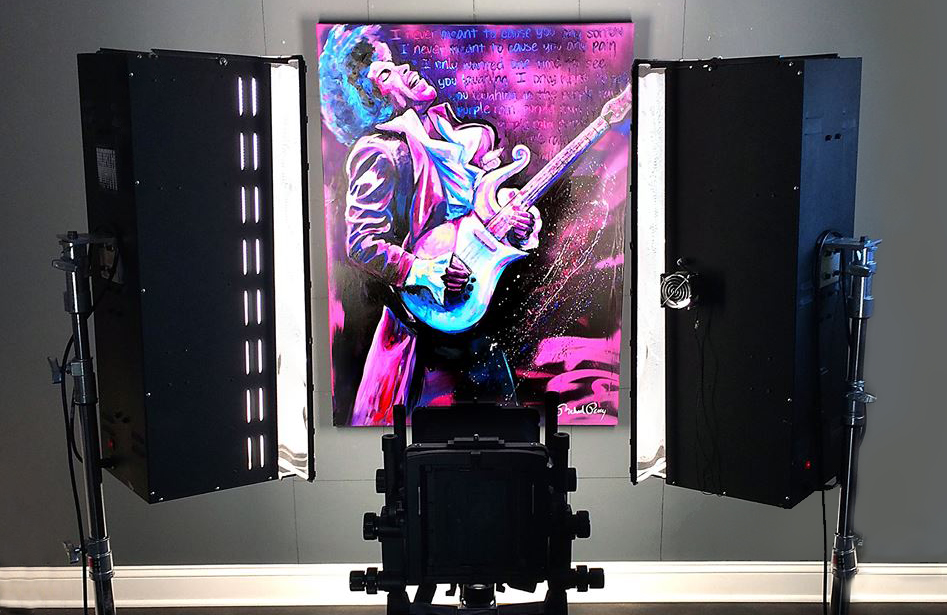
1) Digital Capture: A digital image of an original artwork is created by using a high-resolution digital capturing system. These days the digital capture is the best method for capturing all the subtle detail and nuances of original artwork.
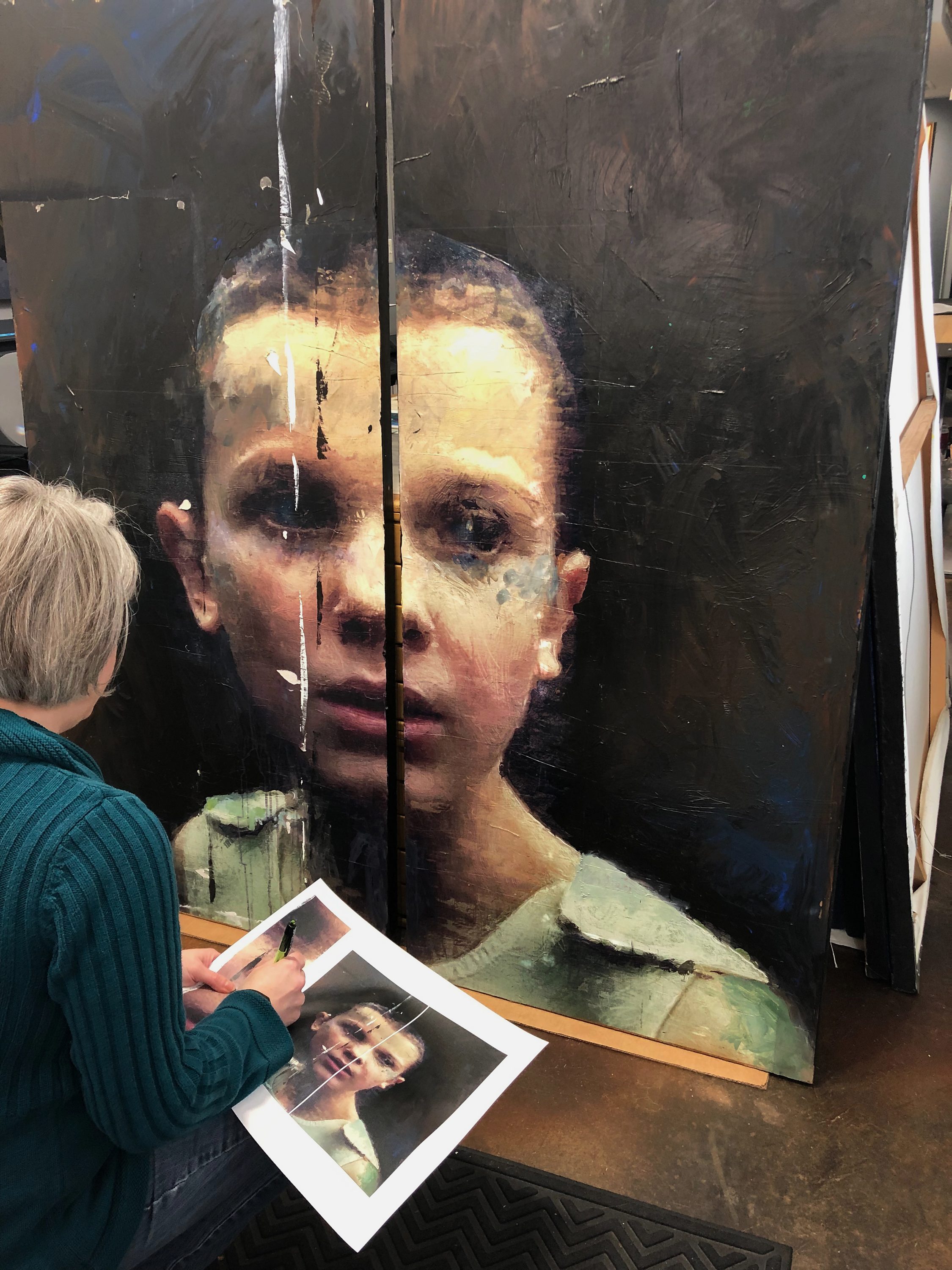
2) Image File Prep: The digital image is then manipulated on a computer to achieve the desired results and proof prints are produced. Manipulating the image includes color and tonal adjustments, cleanup, retouching, and custom image editing. The goal is to create a faithful reproduction of the original art. Our file prep step also includes image and print proof archiving.
Watch out for print shops offering this at a low cost or for free. This may mean that they are claiming ownership of your digital files and will not release them to you without a hefty fee. At Old Town Editions we claim no rights to your artwork or the images from your original artwork.
3) Printing of the image: Once the proof is approved by the client, the image is ready to print. Old Town Editions archives all prepared files so our clients can order reprints whenever they need them. Not all print shops offer image archiving. All you need to do is call and order and in a few days prints are ready.
What makes Old Town Editions unique? Our printmaking process is structured on the concept of repeat edition printing. We archive the digital files as well as physical proof prints. We document settings and keep editions on the same printers, inks, and papers as the original proof to ensure your prints remain consitent throughout the years.
How can I receive discounts?
We have quantity discounts available throughout all of our pricing categories. We also have a few special package deals available for those ready to jump in with large orders.
10 Item Capture Discount
Bring in 10 originals for capture only and each capture will be $60 each (regular price $75 each). Total cost is $600. This discount does not apply to oversize (4’x5′ and over) artwork.
Capture Discounts when Paired with File Preparation
Bring in multiple pieces of the same size for digital capture and file preparation, and there is an opportunity for a discount on the digital capture costs. The more pieces you bring in at one time, the more you can save.
- For example: if you bring in (4) 16 x 20 inch paintings for digital capture and file preparation it will cost only $60 for all of the captures instead of the alternative $60 each ($240 total) if done individually. We can discount the second, third, and fourth capture in this situation due to the fact that the camera system does not need to be set up again for the consecutive capture. This will save us time, saving you money.
File Prep Discounts
The file prep cost is $200 each and can only be discounted if paired with a printing package, linked below. Each file takes hours to prepare for printing and cannot be batch processed. Every file for each original piece has to be handled individually during the proofing process.
Package Deals
If you’re ready to jump in with a larger order, we have package deals available. These deals offer significant discounts on setup fees when paired with large prints orders. You can find more information about our package deals here.
Can I photograph my artwork myself?
Photographing artwork is not a simple task, and if your goal is to create high-quality reproductions it is absolutely worth investing in having a professional photograph your artwork for you. Our studio setup is highly specialized for digitizing artwork, ensuring we eliminate common file quality issues like glare, uneven lighting and poor focus.
If you have a photograph you’ve taken of your artwork, we’re happy to take a look and give you feedback, but we do reserve the right to reject a file for printing if it does not meet our quality standards. Even if we are using a file you’ve provided, we will still require the file preparation before making final prints, so if you are willing to make that investment, you may as well make the additional investment of having us digitize your artwork in order to get the highest quality possible.
Why do I need an image file preparation?
This is a necessary step to the digital fine art printing process to ensure a flawless final print. Our skilled staff will precisely match the print’s color and tone to the original work or optimize digital files for printing to the clients specs. We digitally clean the image of imperfections and perform custom image editing to perfect images. This step also includes retouching and image archiving. There is no limit on effort or materials to reach a final image and print that leaves you completely satisfied.
All digital fine art printing requires file preparation, whether we are reproducing an original artwork or printing from film or a digital file. Each printer, substrate, and ink combination requires a unique set of adjustments to produce the best matched print possible. For more about our image file preparation visit our art and artifact reproduction in our services section.
Why print with Old Town Editions?
The approach that we take to fine art printing and art reproduction here at Old Town Editions is one of a kind. We have been working with artists, photographers, galleries, museums and individuals for more than 20 years. We have a proven history of consistently producing the finest digital fine art prints the industry has to offer. Our process and workflow is designed to meet the needs of each of our clients whether the volume is small or large.
One of the main things that sets Old Town Editions apart from other printmakers is our commitment to partnering with our clients, and forming a collaborative relationship. When working with new clients we offer free consultations to discuss not only our process, but also strategies and information needed for clients to have success marketing and selling their Giclee prints. In this first consultation we will ask our clients questions to make sure we have a full understanding of their needs so that we can help as much as possible. Artists come to us at different levels in their career, from just starting out to artists who have been selling originals for years. We are sensitive to the different needs of different clients and will make sure we are providing the best level of service to every client. We are committed to helping our clients grow their business and will be here to help every step of the way.
From our own personal experience, as well of years of experience working with clients, we have a wealth of knowledge to share about printing options, edition sizes, packaging prints, marketing and selling prints and originals, and advice for success. Not only do we share information with our clients in person, we also have an extensive list of articles and pages here on our website that we have written to help artists understand the giclee printmaking process and offer tips for success. We want to make sure anyone who works with us is prepared for long term success as an artist.
Our commitment to edition printing allows artists to order prints as they need them, rather than having to order an entire edition of prints at once. There are several steps we take to ensure color consistency on orders years apart. We maintain our printers longer than most printmakers for the sake of keeping editions true. In addition to archiving the final color matched file, we also file a physical proof so we can reference color on future orders. This aids in quality control and allows us to make adjustments to match the print on a new printer if necessary.
We know that choosing a printmaker can be difficult, and your search will likely lead you to find different studios offering very different prices for what seem like the same services. Although it is tempting, choosing a printmaker solely based on who offers the lowest price is generally not in your best interest. A great rule of thumb when looking at different price options is “if it seems too good to be true, it probably is”. The reason their prices are so low is that their quality is low, and they are not offering as much as a professional studio like Old Town Editions can. Spend some time looking over their websites, and get a sense for what they are offering.
Giclee Prints
What is a giclee?
A giclee print (pronounced gee-KLAY) is a fine art print made with a high-end inkjet printer. In the giclee printing process the artwork is captured, proofed and printed digitally. These prints are reproduced using incredibly precise printers and archival inks. Giclee prints are recognized by the world’s leading galleries and museums as the finest reproductions available to date.
Term Origination: The word giclee originated from the French words “gicler” and “gicleur”. Gicleur is a technical term for an inkjet nozzle. The word “gicler” means to spray or squirt a liquid. The word giclee was coined by Jack Duganne in the early years of the digital printmaking business. The term was developed so that artists, galleries, and dealers would not have to market their prints under the generic label of “inkjet” prints.
Problem with the term giclee: There have been some issues raised recently with the over use and abuse of the term. The term giclee is unfortunately used to describe any digital print regardless of the quality of the materials and printers used to make them. This abuse of the term giclee confuses buyers and clouds the understanding of what the final print buyer understands that they are buying. Other names we recommend calling your giclee prints are: Digital fine art print, archival pigment print, pigment print, digital fine art reproduction, archival inkjet print, or fine art inkjet print.
For a better understanding of our stance on the term giclee see our article: “What is a digital fine art print?”,
How do I care for my giclee prints?
Because paper and canvas are damaged by prolonged contact with chemically unstable materials, the choice of materials for storage and exhibition is critical. Unstable materials have acids in them that leach into your prints and originals over time and cause yellowing, fading, and physical deterioration. Always make sure you use acid-free archival rated materials when packaging or framing your work.
Fine Art Paper Print Care
Handling: The paper prints should be treated like an original work on paper or any other fine art print such as an etching or serigraph. Handle paper prints gently and as little as possible. When doing so, be sure that your hands are freshly washed or wear gloves to minimize transfer of oils from your skin. Avoid touching the printed area, as you are likely to cause scuffs or flakes.
Storage: Mats, folders, and storage boxes should be labeled acid-free or 100% cotton rag. Store matted works or foldered items in flat files or in appropriately sized boxes specifically designed for storing works of art or documents. Adorama has storage boxes at a great price. Oversized objects should be stored flat whenever possible, not rolled or folded. Store unframed prints in a cool and dry environment. Warm or moist conditions accelerate deterioration and encourage mold growth and insect activity. Works should also be protected from environmental pollutants and airborne particulates.
Framing: Matting and framing your paper prints with archival materials and techniques provides the best possible protection. We recommend acid-free or 100% rag mats combined with a UV protectant glass. Your framer may not automatically choose acid-free materials because they are generally more expensive than standard framing supplies, so be sure to ask. Keep in mind it is well worth the investment! You should also make sure that the prints are being mounted using archival methods. The safest type of mounting is a hinge mount with rice paper or linen tape. In this process only a very small area on the edge of the print is exposed to adhesive. Dry mountings generally considered less archival because the entire back of the print is adhered to a board.
Canvas Print Care
Handling: Just like paper, the canvas prints should be treated like any other fine art object. Handle canvas prints gently. When doing so, be sure that your hands are freshly washed, or wear gloves, to minimize transfer of oils from your skin.
Adding a Protective coating: Because canvas prints are usually stretched and not framed behind glass, they are more in need of a protective coating. Archival canvas prints should have an additional spray-on protectant that will be applied after the printing. The coating can protect the print from minor scratches, oils from the skin, and environmental pollutants. You will be able to wipe your prints off with a wet cloth to clean them and not have to worry at all about smudging, scratching or removing ink from the canvas. All of the canvas prints offered by us here at Old Town Editions will be coated with Timeless print varnish by Breathing Color. We can only offer uncoated prints to artists intending to embellish then clear coat the prints themselves once done with the embellishment.
Storage: Just like paper, canvas is damaged by prolonged contact with chemically unstable materials. The choice of materials for storage and exhibition is critical. You can store canvas prints flat or rolled. Flat is going to be the best for long term storage if the piece is not stretched or hanging on a wall. Rolling the print image side out will reduce the stress on the print whether you are storing for a long or short period of time.
Framing: There are several ways to frame canvas prints. Some methods are more archival than others. The most archival method is to stretch your canvas prints on primed wooden stretcher. The primer separates the acids of the wood from the print so it does not leach into the print. Just like with paper (read above) adhesives can permanently damage and reduce the longevity of your prints even if they claim to be archival.
How long will my prints last?
At Old Town Editions, we are committed to providing you with the highest quality prints possible. When giclee printing was first introduced, the longevity of the inks left something to be desired. In the past decade there have been huge advancements in print longevity due to the the extended permanence of the inks available. We have kept up with these advances every step of the way. We are constantly searching for ink sets that have the highest archival ratings and the widest color gamut. The pigment inks we currently use are not only lightfast, but are also water-resistant. We combine these pigment inks with papers that have similar archival qualities and a proven record of acceptance in the art and museum market. We do not carry any “second-tier” products. The materials we use are rated to last 100+ years without fading or discoloration.
How should I price my giclee prints?
Don’t worry, lots of artists struggle with this aspect of their business. We’re here to help!
As many artists have experienced, pricing giclees incorrectly can leave you frustrated from lack of sales. The most important thing to realize is that not everyone’s giclees are going to be priced equally. If you price your giclee prints based on the correct factors from the beginning, you should have a lot more success. Two of the most important factors that affect your pricing are the quality of your giclees and your reputation as an artist. If you’re just starting out with your art career and selling your work, you will probably ask less money than a career artist with an established reputation. Edition number and method of sale can also be taken into consideration when figuring how to price your giclees.
One of the biggest challenges in figuring out how to price your giclees is that every artist is at a different skill level with varying reputations. We believe that our “one third” method is the best way to price your giclees relative to your original artwork. A high quality archival giclee the same size as your original can be valued at roughly ⅓ of the cost of the original. This is a general guideline, and you can ask more or less than that one third cost depending on your reputation, experience, and print quality.
Another method that helps with pricing your giclees is a chart we have compiled through direct experience working with our clients. The numbers provided are averages for paper and canvas prints based on giclee size. Please keep in mind that this chart is supposed to help guide you with pricing, not dictate the value of your art. Some of the artists we work with price their giclees higher or even lower than some of the prices we have listed.
It is also important to remember that your edition number will also influence the price you put on your giclees. If you are limiting your edition to low numbers like 50 you can generally price the giclees higher than if you are limiting the edition to a higher number, such as 250. Often an artist will raise the prices of the giclees over the life of an edition as more sell and there are fewer left in an edition.
One last method of figuring out how to price your giclees is by considering the cost of production. You will decide how much profit you are happy making over what it cost to produce your giclees. This method works well for galleries, charities or non-profits wanting and expecting high volume sales. Usually a gallery, charity, or non-profit would print the whole or half of the edition up front to get the printing cost down to keep their retail prices low. This method of pricing would give an artist the most amount of exposure with less profit per print.
Whatever you do, do not set a high price and then lower that price down the road. Your clients want to see your work appreciate with time, not depreciate. You can always run a special or a sale at a special event if you must offer your prints lower than a previously displayed price.