Articles
How Well Does Dimensional Art Reproduce?
We work with a number of artists whose work contains 3D elements. This includes heavy paint texture, mixed media artwork, and heavily layered cut paper artwork. When reproducing this type of work, we commonly get asked how the artwork will look when digitized and how the final prints will appear. While we cannot make 3D prints, there are steps we take when digitizing the artwork to ensure that the 3D/textured elements are captured accurately and will be represented in digital and print form.
Photographing 3D Artwork
Proper lighting is crucial when photographing artwork to begin with, but it is especially important when reproducing artwork with texture or 3D elements. For most artwork, you want to light the piece evenly from both sides to ensure there are no hot spots.
With textured artwork, we instead place both of our capture lights on the same side of the artwork, so that all light is shining in one direction across the artwork. This creates shadows which help to show the texture/3D elements of the artwork. We’ll adjust our lights to suit the needs of each piece of art, setting up more extreme or more subtle uni-directional light depending on what is needed to create nice shadows on the digital capture.
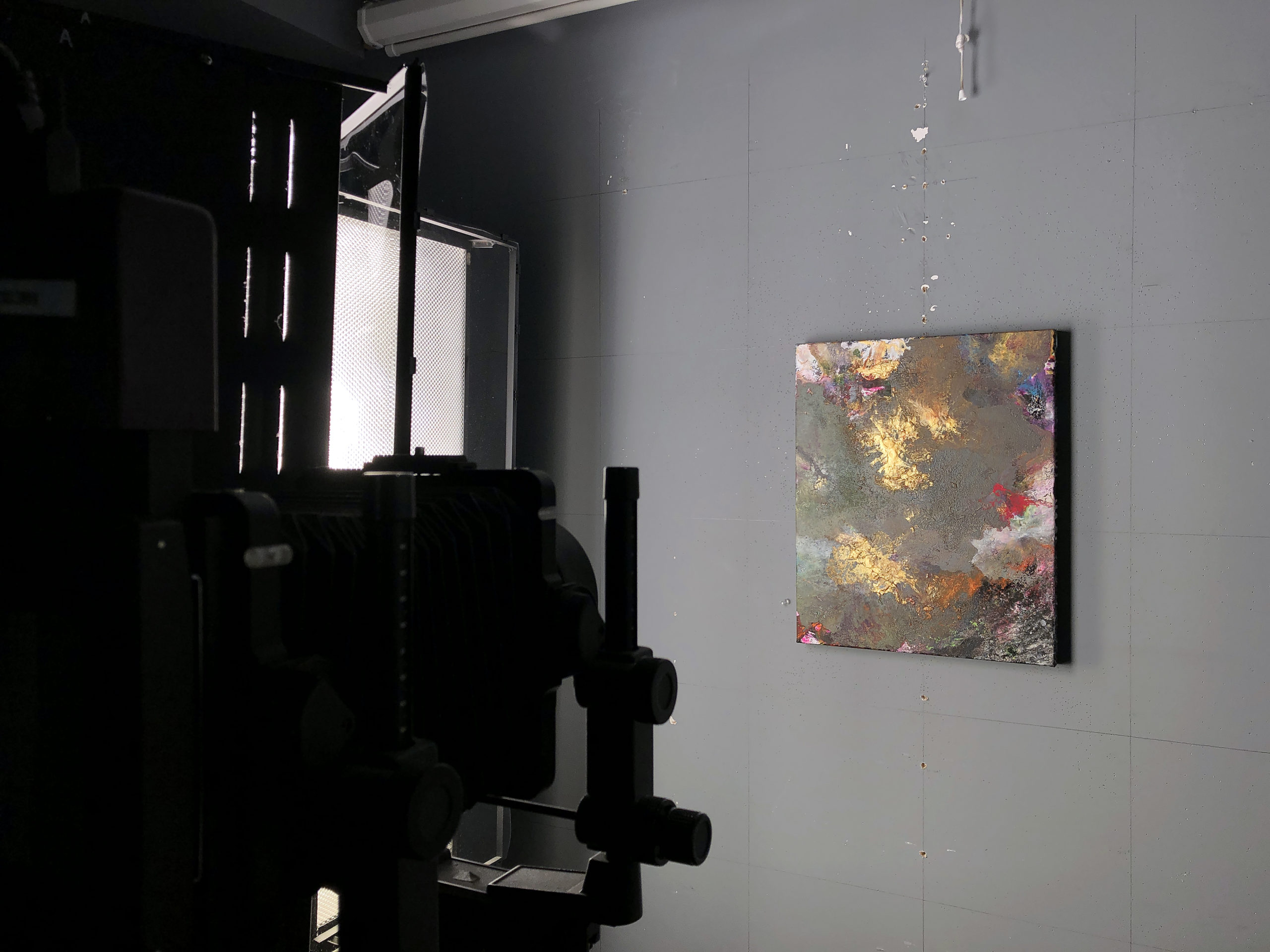
Our digital capture setup with the lights positioned to create shadows on texture artwork – Art by Anna Hamilton
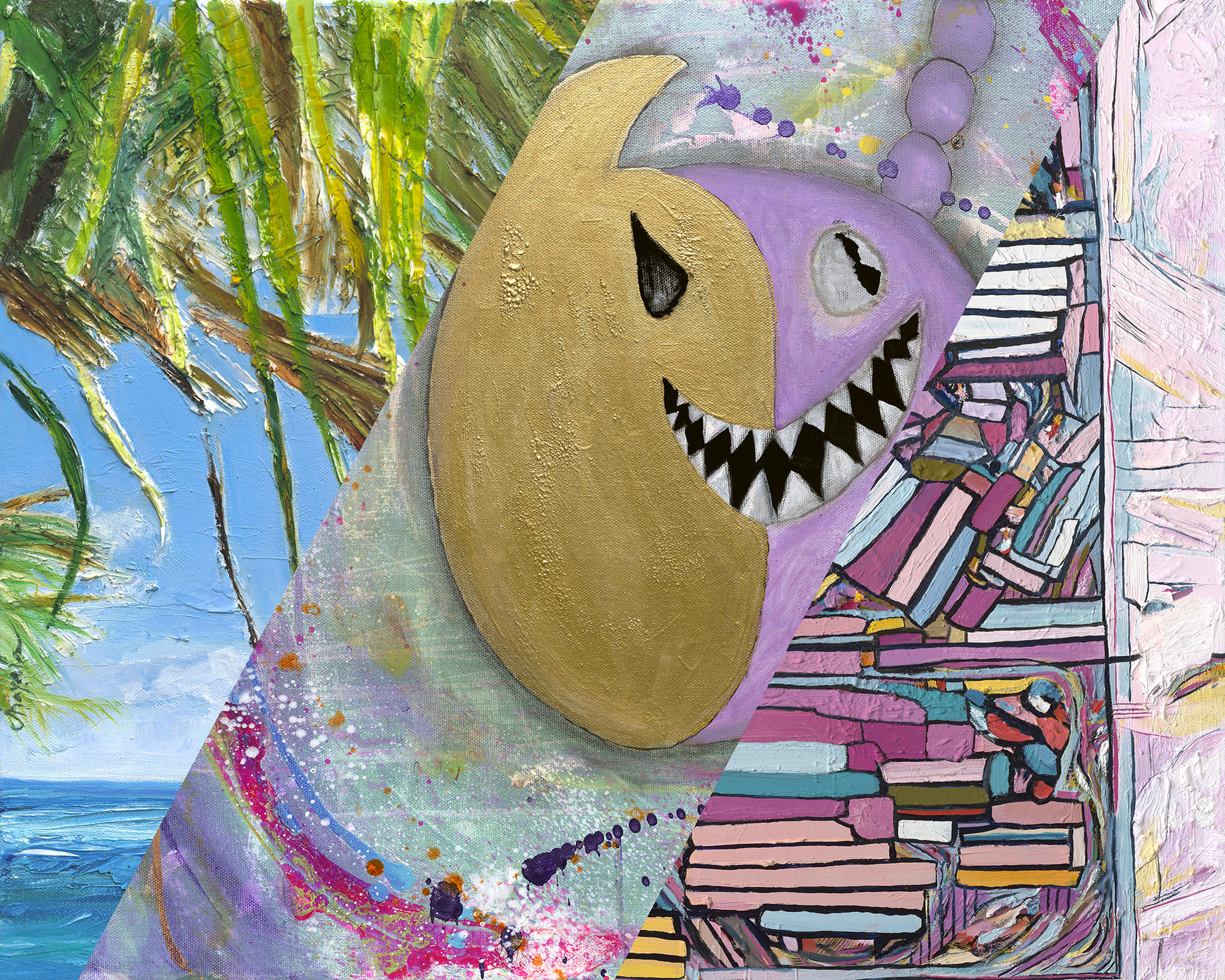
Our digital image captures of textured artwork.
Artists, from left: Chaya Kipper, Anna Hamilton, Angie Coulson
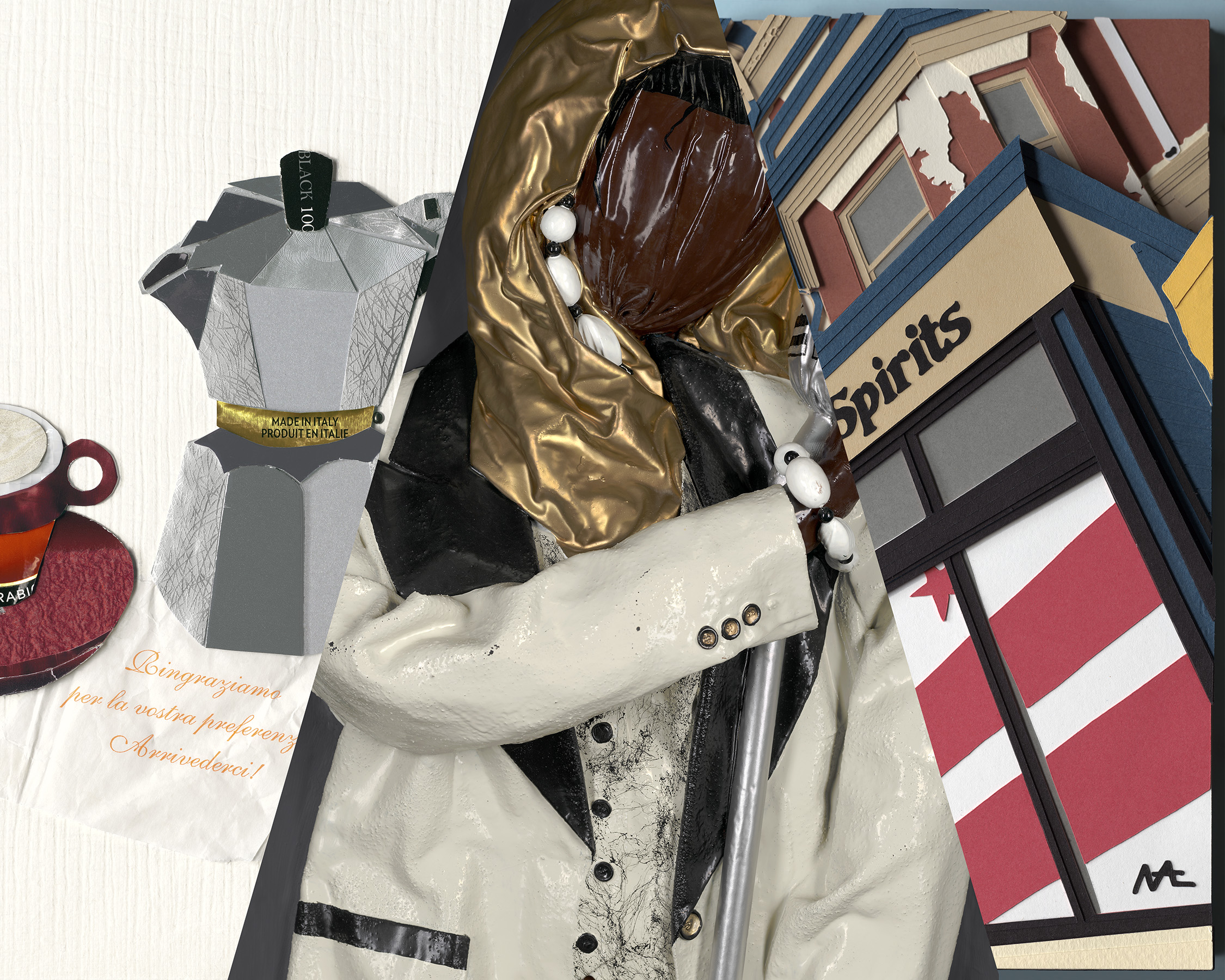
Our digital image captures of textured artwork.
Artists, from left: El Easley, Craig Stewart, Nick Ledyard
Printing 3D Artwork
Artists are often worried that their prints won’t look textured the way their artwork does. If your print studio has done their job when digitizing the artwork, this shouldn’t be a concern! There will always be differences between prints and original artwork, as they are different mediums, but if the artwork was photographed well and lit correctly, the texture should translate clearly to the print version.
Embellishing Prints
If you want to have truly 3D prints, one great option is to embellish your prints. This typically involves painting overtop of the prints and many artists who embellish their prints do so because they want each print to be unique. It is entirely up to the artist how much of the print they want to embellish. Some artists add only small, subtle embellishments, while others will embellish more heavily. You can read more about embellishing giclee prints here!
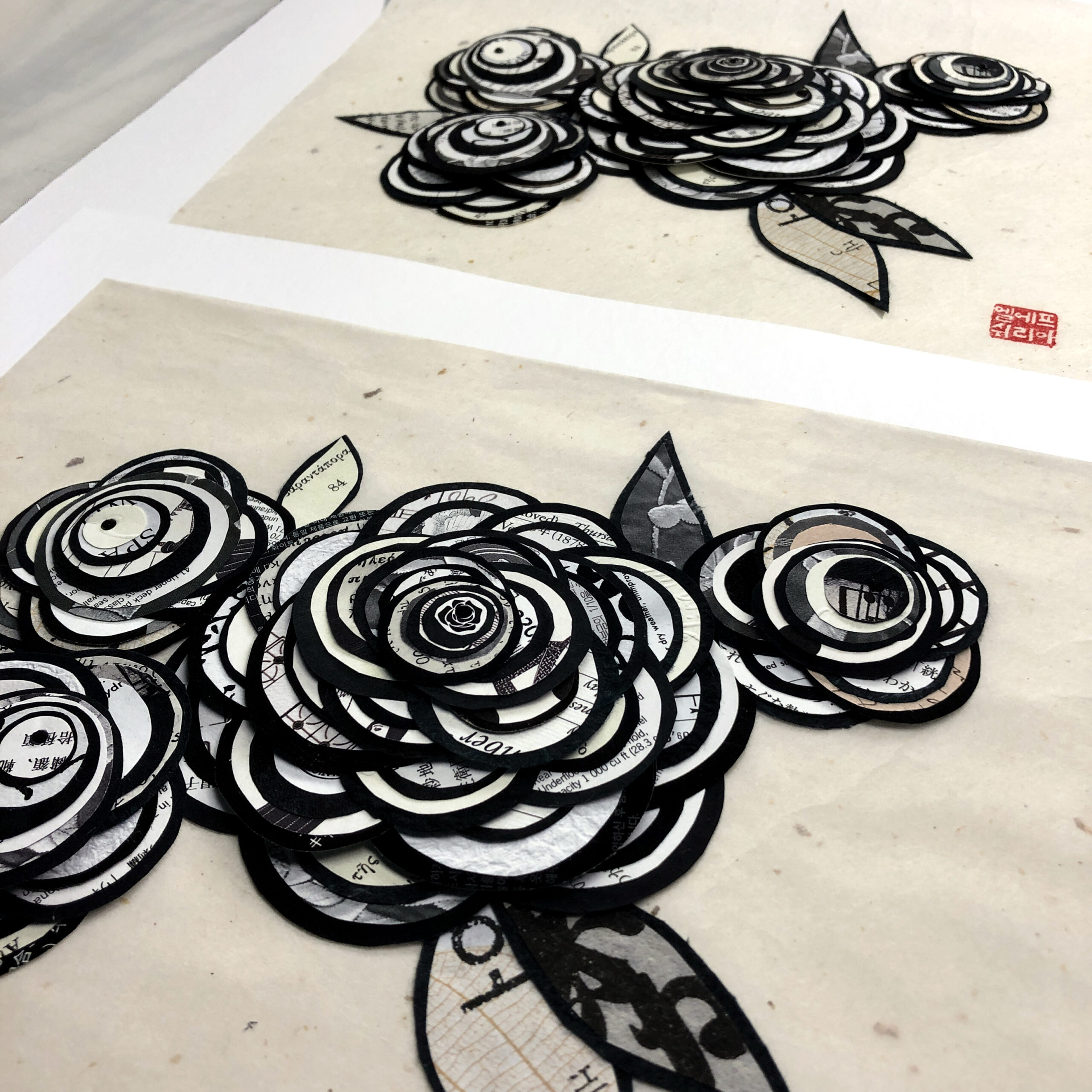
Print reproduction of El Easley’s cut paper artwork.
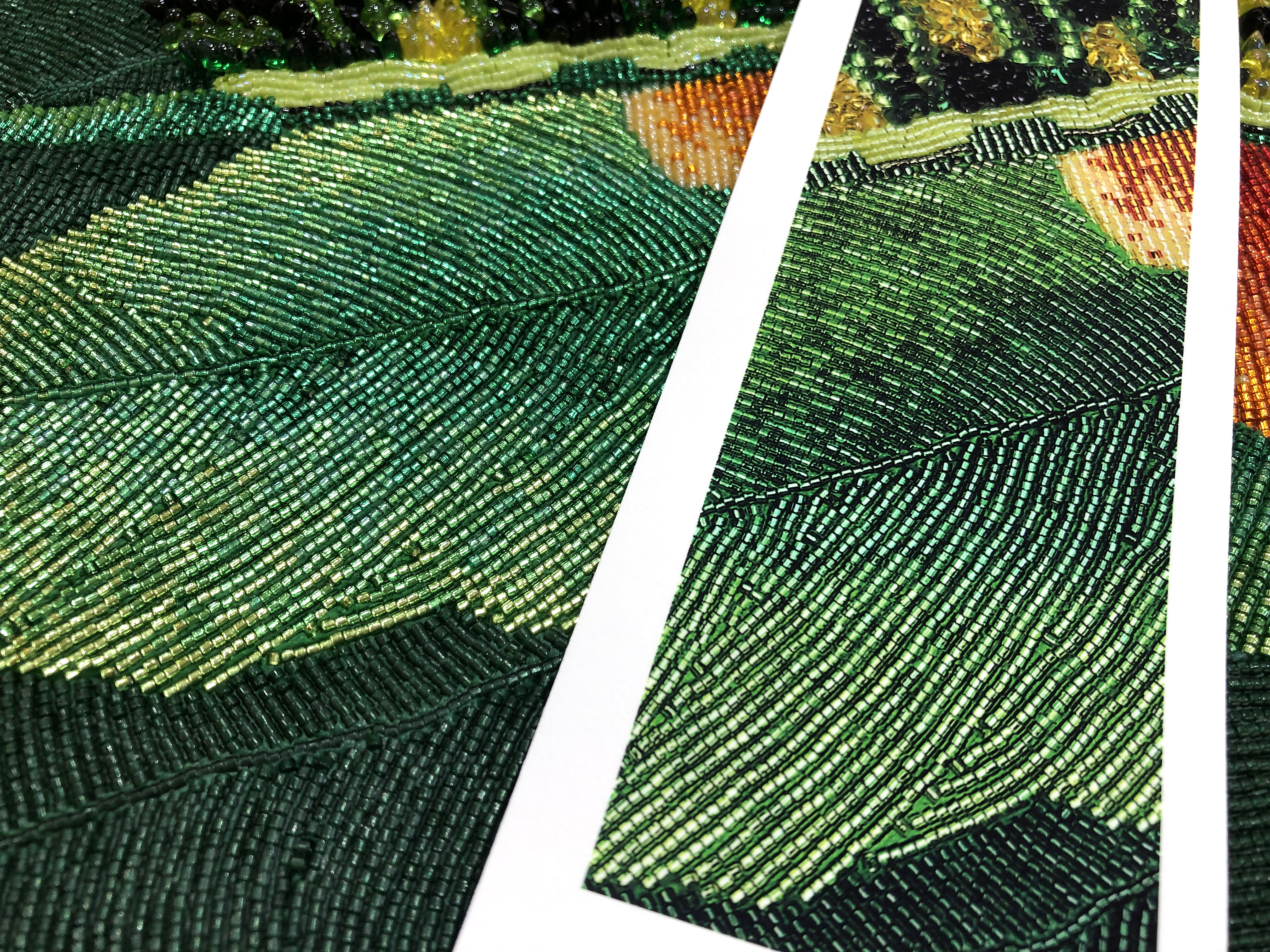
Section of print reproduction with the original work composed of seed beads by Katharine Claringbould.
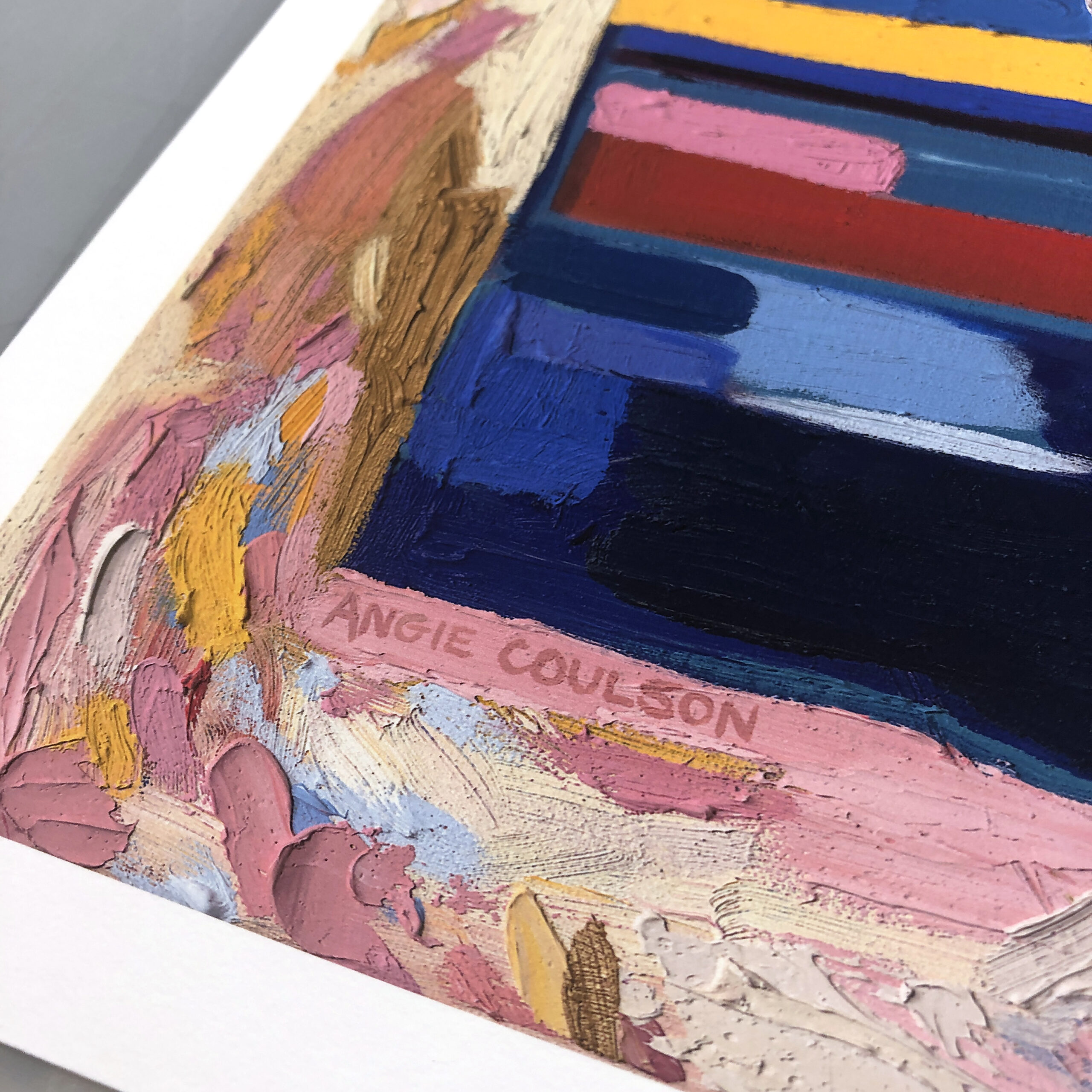
Print reproduction of Angie Coulson’s canvas painting.