Articles
Photographing Texture and Metallics
Photographing artwork is a very specialized process. To generate files that are large enough and high-quality enough for print reproductions requires specialized equipment, proper lighting, and trained technicians. Photographing artwork with 3D texture adds another layer of challenge, as it is important to be able to accurately capture the 3D effect of the original artwork. This ensures that even on a flat print, the effect of the texture is still clear and is an accurate reproduction of the original artwork. Metallic paints are another factor that can add challenge to photographing and reproducing artwork. As we’ve highlighted in a previous post, photographing metallics on artwork requires a specialized process to capture the metallics without having glare appear on any other part of the artwork. When artwork has both texture and metallics, this poses some extra challenges to be able to accommodate both of these factors.
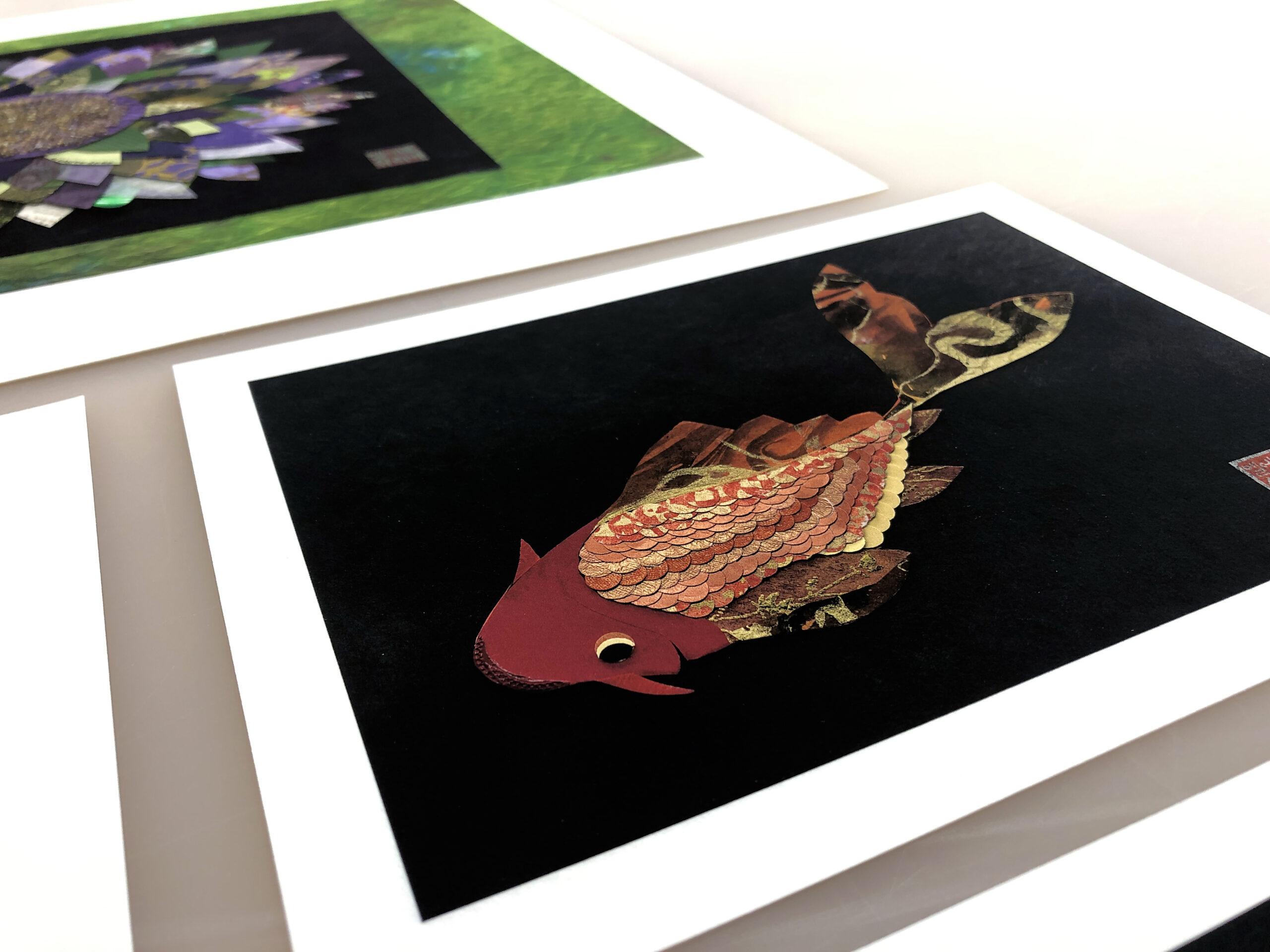
Print reproduction of El Easley’s layered paper art featuring texture and metallic
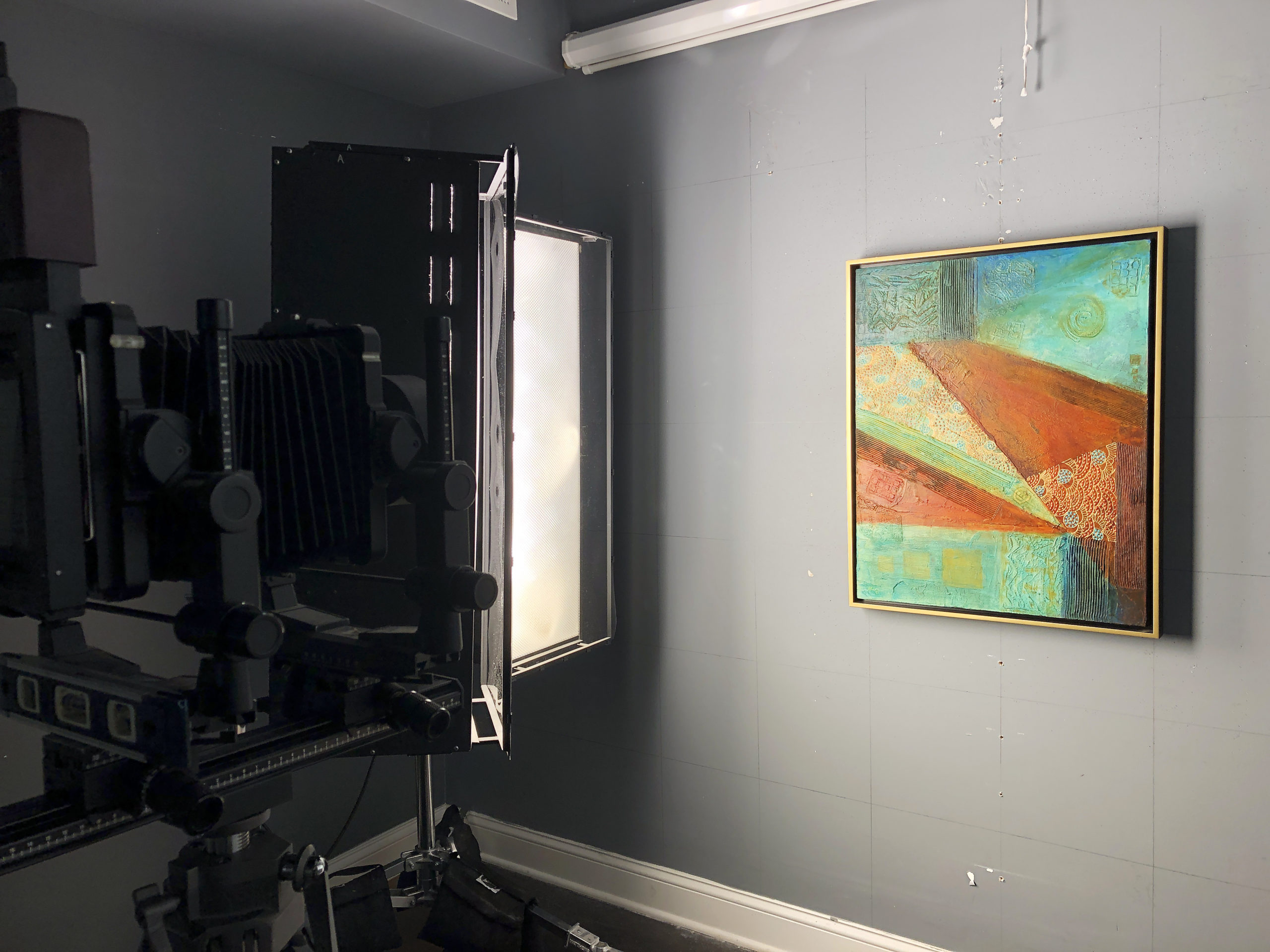
Artwork by Pat Stacy
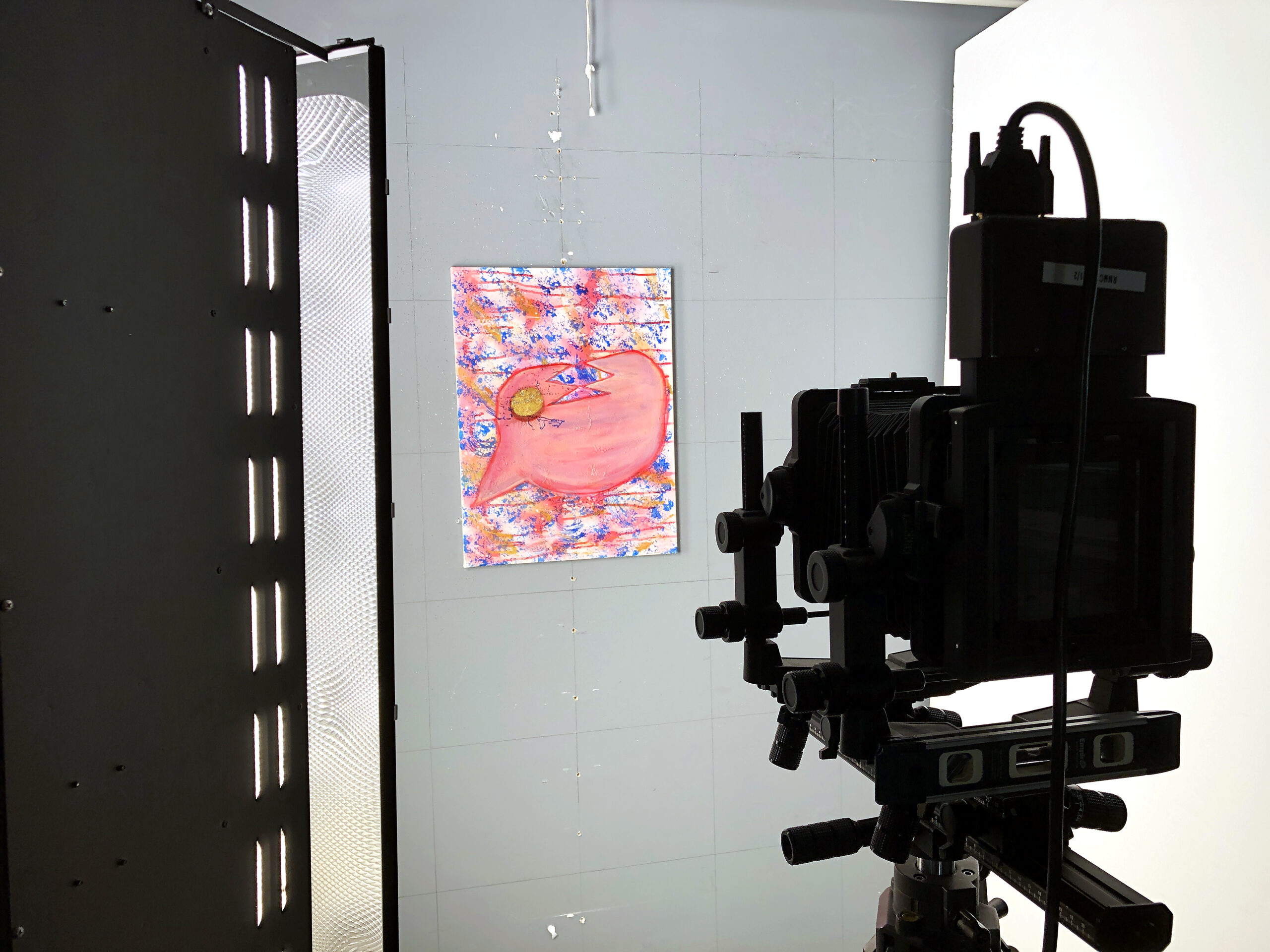
Artwork by Anna Hamilton. Using a white card to bounce light onto the metallics on the right side of the artwork.
Lighting for Texture
The most common lighting setup when photographing artwork is to have one light on each side of the painting, pointed at a roughly 45 degree angle toward the painting. This lights the painting evenly without being too harsh. However, if a piece of artwork has texture, this lighting would effectively cancel out any shadows created by the texture, as the light from one side would fill in any shadow created by the other side. In order to create shadowing on the image we position both lights on the same side of the artwork, with one pointing pretty harshly across the artwork to create shadows, and the other at a more gentle angle to add light to the far side of the artwork.
Since we are able to create shadows this way, even a print reproduction that is flat will still show the texture of the original artwork, and be as true to the original art as possible. When textured artwork also has metallics, this is an added challenge to photograph accurately. The lighting needed to create shadows from the texture can cause the metallics on the side that the lights are on to shine much brighter than the metallics on the far side of the artwork. This becomes a particular challenge with larger artworks. We have a few different techniques we use to ensure that the metallics are shining evenly. Every piece of artwork is different, and we often find ourselves coming up with creative new ways to get the best image possible. Most often this can involve using reflectors, or white cards, to bounce additional light onto the artwork in areas that aren’t shining as brightly.
Polarization for Metallics
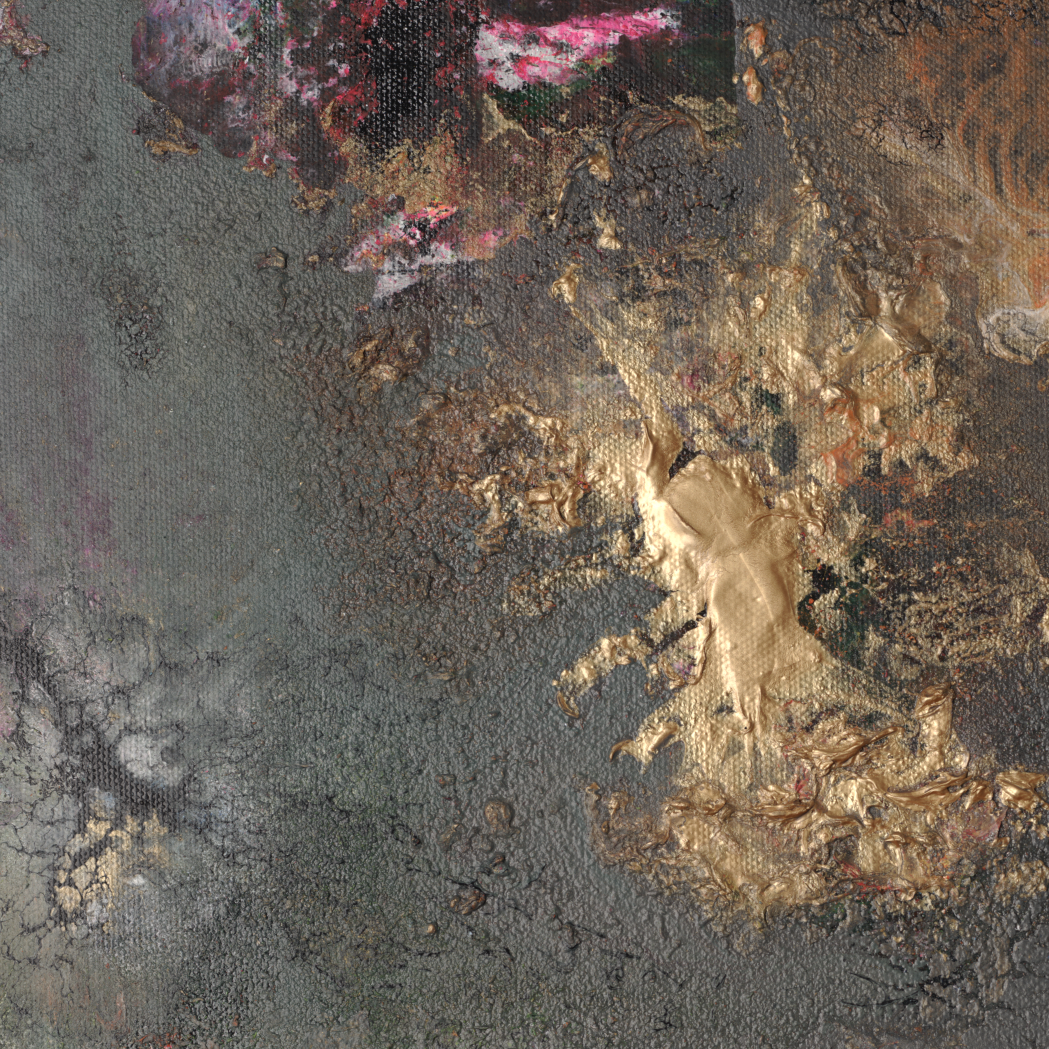
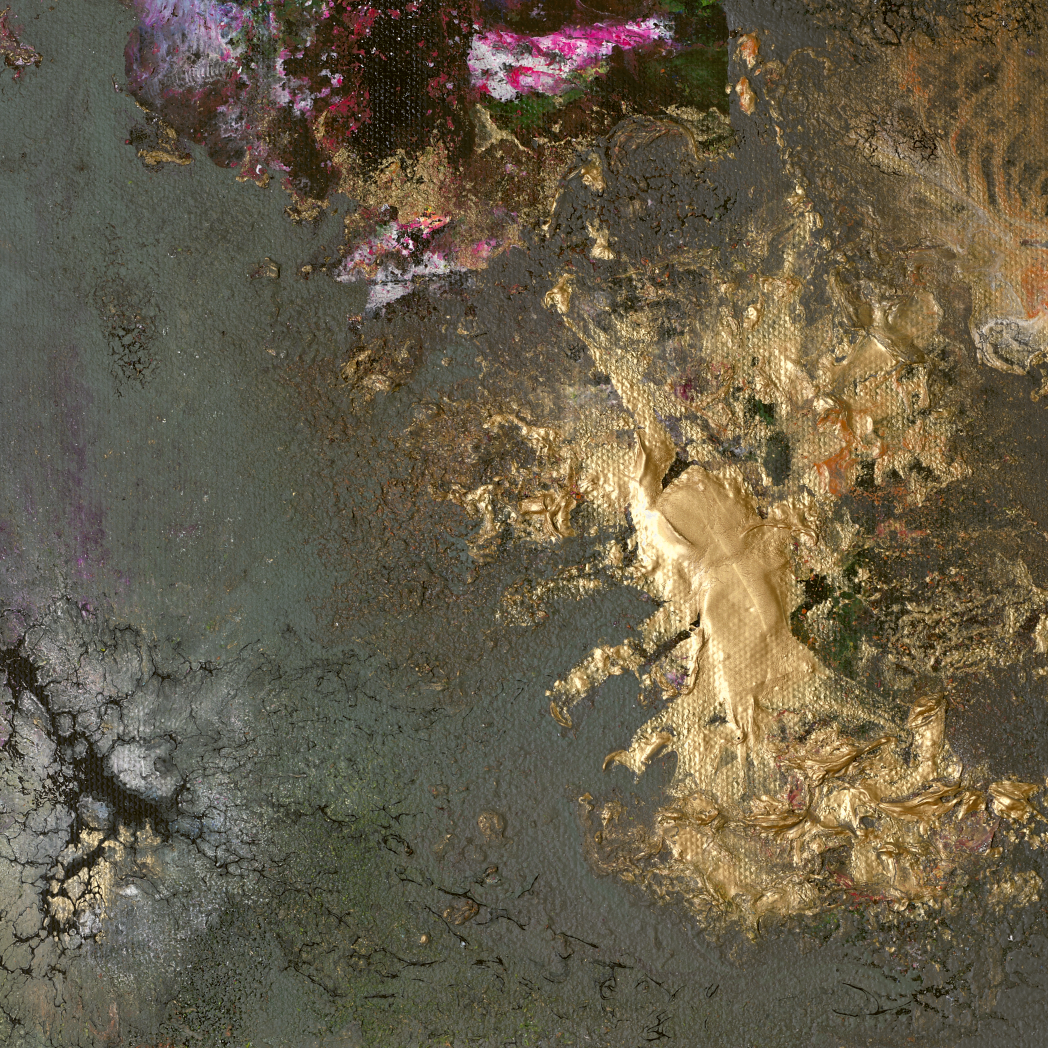
Below is an example of artwork with metallic texture. When photographing artwork we always use polarizing filters on both of our lights, and our camera, to cancel out any glare on the artwork. We alter this process when photographing metallics, as the polarizing filters cancel out the shine from the metallics. As you can see in the below images, on the far left, the gold paint appears brown in the polarized image. In the middle is the fully unpolarized image, where the gold is able to shine accurately, but there is glare on the rest of the artwork. Finally, in the third image, the polarized and unpolarized images have been combined, maintaining the metallic effect of the gold, without showing any glare on the rest of the image.
Polarized, gold paint appears brown
Unpolarized, gold is shining, dark areas show glare
Final image, polarized and unpolarized images combined and color adjusted to match original
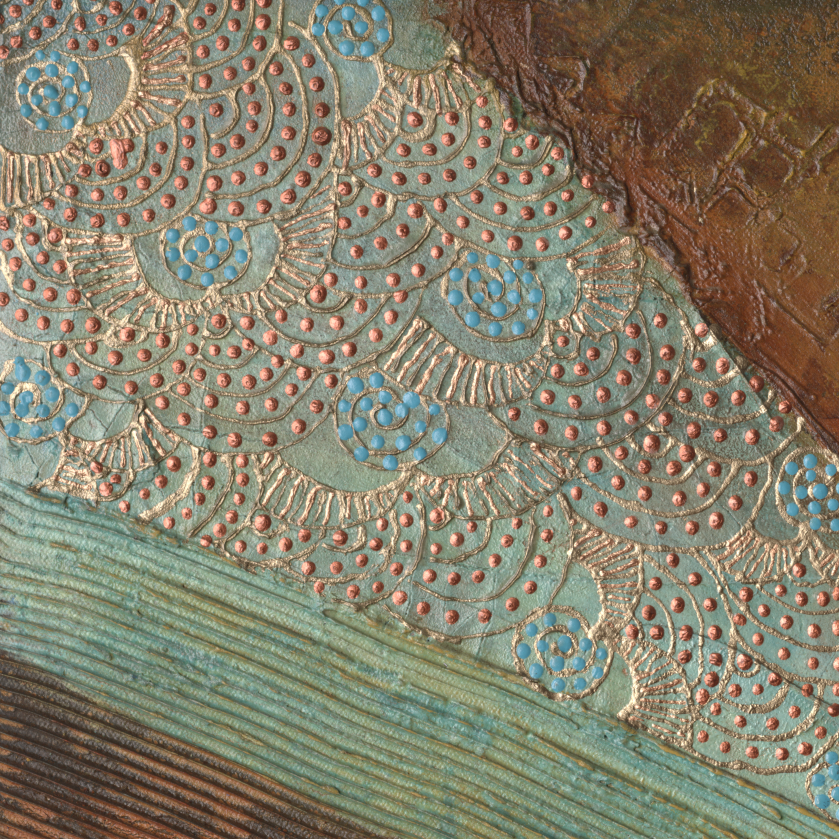
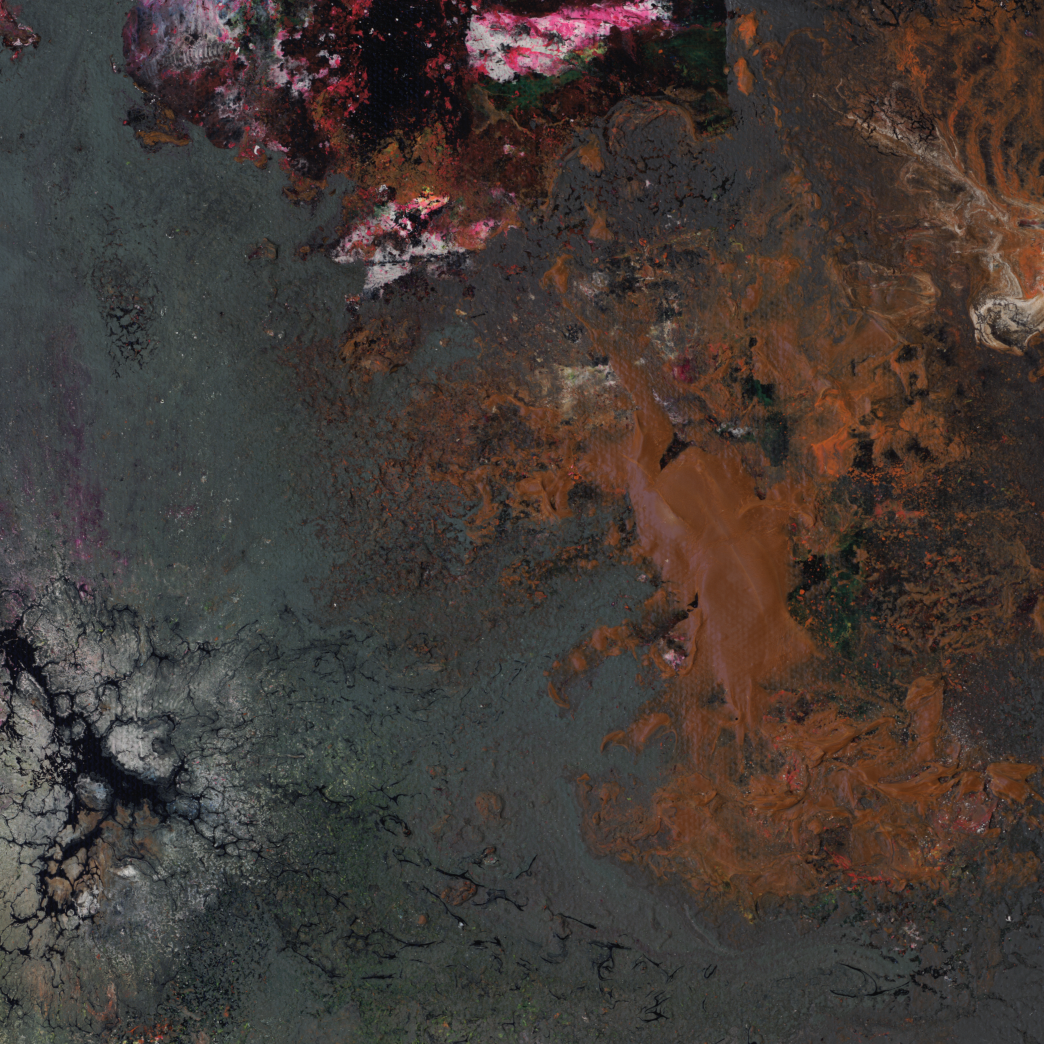
Close up of artwork by Pat Stacy showing both texture and metallic
Accurately photographing artwork with only texture, or only metallic can be a challenge itself if you do not have access to a professional setup with the highest quality equipment. Combining the two together creates an even tougher challenge, but it is a challenge that the team at Old Town Editions knows well, and has significant experience tackling. It is always our goal to reproduce your artwork as accurately as possible, no matter what challenges it may present. We love being able to provide accurate reproductions, especially on a piece that someone has previously had trouble with. If you have artwork with metallic texture, or any artwork that you’ve been having trouble getting accurate reproductions of, don’t hesitate to reach out to us to schedule a time to come by our studio to learn more!
Suggested further reading: Intro to Printing Your Artwork